MAA DURGA
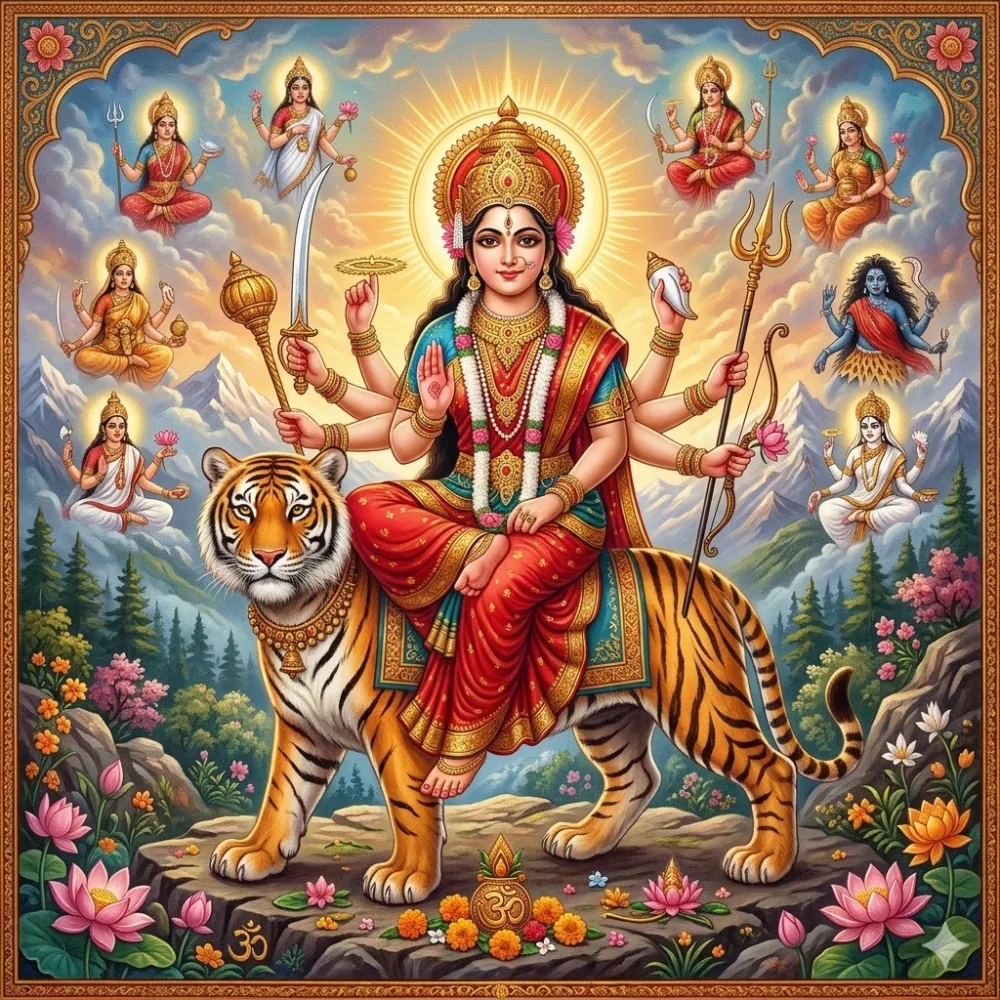
The vibrant tapestry of Hindu devotion reaches its crescendo during Navratri, a festival dedicated to worshipping the nine unique forms of the Mother Goddess, Durga. This divine nine-night period, celebrated with fasting and joy, honors the victory of good over evil. The divine artwork above (Image 0) beautifully encapsulates this cosmic energy, featuring Goddess Durga in her fierce glory, surrounded by her nine manifestations (the Nav Durga).
In this feature, we delve into the meaning, significance, and iconography of each of the nine forms of the Divine Mother.
1. Goddess Shailaputri: The Daughter of the Mountains
**Significance:** Shailaputri, meaning "Daughter of the Mountain" (Shaila - mountain, Putri - daughter), is the first manifestation worshipped on Navratri Day 1. She is the essence of nature and patience.**Worship & Benefits:** Worshipping her evokes stability and grounds the devotee.
2. Goddess Brahmacharini: The Seeker of Divine Knowledge
**Significance:** Worshipped on Day 2, Brahmacharini signifies the student life (Brahmacharya). She is the embodiment of Tapasya (penance), wisdom, and ethical conduct. **Worship & Benefits:** Devotees pray to her for knowledge, self-control, and the strength to endure hardships.
3. Goddess Chandraghanta: The Embodiment of Bravery
**Significance:** On Day 3, we worship Chandraghanta. Her name comes from the half-moon (Chandra) shape of the bell (Ghanta) on her forehead. She represents the synthesis of beauty and bravery.**Worship & Benefits:** She is the goddess of serenity and victory. Her divine sound is believed to protect devotees from negative energies.
4. Goddess Kushmanda: The Creator of the Universe
**Significance:** Day 4 is dedicated to Kushmanda. Legend states she created the entire universe with her divine, radiant smile (Ku - little, Ushma - warmth, Anda - egg).
* **Worship & Benefits:** She resides in the solar plexus and is worshipped for good health, prosperity, and cosmic energy.
5. Goddess Skandamata: The Mother of War
**Significance:** Skandamata means "Mother of Skanda" (Lord Kartikeya). Worshipped on Day 5, she represents maternal love, leadership, and protection.
* **Worship & Benefits:** Praying to her grants blessings for both spiritual and material success.
6. Goddess Katyayani: The Warrior Goddess
**Significance:** On Day 6, the warrior form Katyayani is worshipped. Named after sage Katyayan, who desired the Mother Goddess as his daughter, she is the force that vanquished the demon Mahishasura.**Worship & Benefits:** She is the epitome of courage and is worshipped for removing obstacles and granting victory.
7. Goddess Kaalratri: The Fierce Destroyer
**Significance:** Kaalratri is worshipped on Day 7 (Maha Saptami). Representing the fierce form of nature (Kaal - time, Ratri - night), she is the most terrifying avatar, associated with the annihilation of evil.
**Worship & Benefits:** Despite her fierce appearance, she is known as Shubhankari (one who does good). Devotees pray to her to overcome fears, sickness, and dynamic enemies.
8. Goddess Mahagauri: The Symbol of Purity
**Significance:** On Day 8 (Maha Ashtami), we worship Mahagauri, the extremely fair (Maha - great, Gauri - white). She symbolizes serenity, purity, and profound peace.
* **Worship & Benefits:** She is the goddess of compassion and is believed to wash away all sins of her devotees, purifying their souls.
9. Goddess Siddhidhatri: The Giver of Perfections
**Significance:** Day 9 is dedicated to Siddhidhatri. "Siddhi" means meditative ability or perfection, and "Dhatri" means giver. She is the source of all divine powers and spiritual insight.
* **Worship & Benefits:** She is worshipped to attain spiritual enlightenment and all material and meditative perfections. It is believed that Lord Shiva attained his powers through her grace.
Understanding the Visual Symbolism of Nav Durga
The provided image (Image 0) beautifully captures the essence of Navratri devotion:
**The Main Deity:** Goddess Durga is depicted in the center, radiating a golden halo, symbolizing supreme cosmic power. She is seated upon her vehicle (Vahana), the **tiger**, representing her command over passion and wild nature.
**Her Weapons:** Her multi-armed form (a symbolic *Ashtabhuja* or eight-armed figure here) holds various divine attributes: a **trishul** (trident) for the triple nature of reality, a **chakra** (discus) for the cycle of time, a **shankha** (conch shell) for the sound of creation, and a **khadga** (sword) for intellect. **The Surroundings:** She is encircled by smaller, distinct portraits of the other eight forms of Nav Durga, showing the diversity of her energy. The background features sacred Himalayan peaks and forests, emphasizing her connection to nature, while the lotus flowers




No comments yet. Be the first to comment!